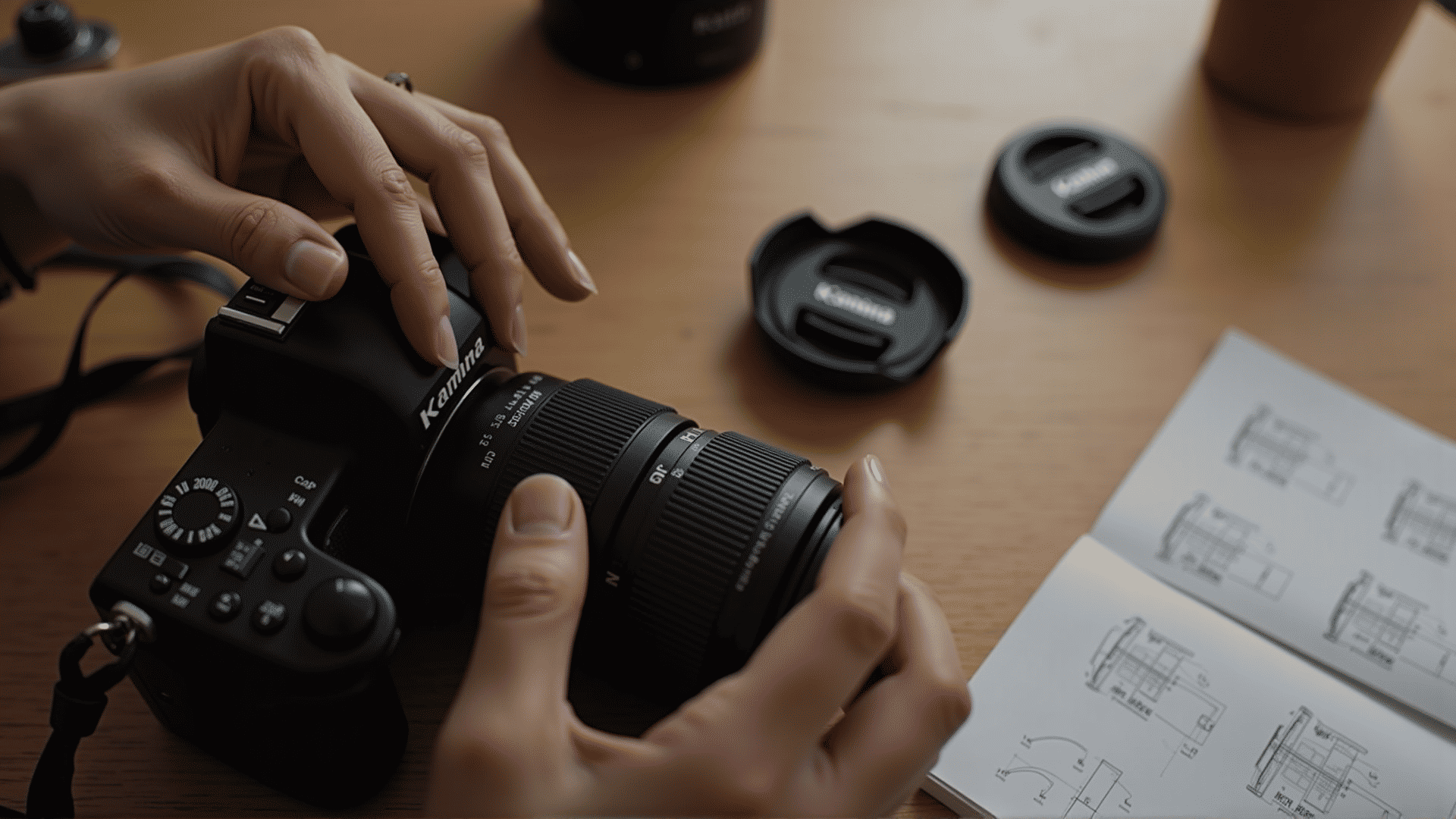
Understanding and mastering the core functions of a camera can significantly elevate your skills and help you capture stunning images effortlessly. Whether you're using a digital single-lens reflex (DSLR), mirrorless, or compact camera, gaining knowledge about three key settings—aperture, shutter speed, and ISO—will improve your ability to achieve desired results.
Aperture: Controlling the Depth of Field
The aperture is the lens opening through which light enters the camera. It is measured in f-stops, like f/1.8, f/5.6, or f/16. A lower f-stop means a wider aperture that allows more light and creates a shallow depth of field, making your subject stand out against a softly blurred background. This is perfect for portraits or any scenario where you want to emphasize the subject. Conversely, a higher f-stop like f/11 or f/16 results in a smaller aperture, suitable for landscapes where a greater depth of field is required to keep more of the scene in focus.
Shutter Speed: Freezing or Blurring Motion
Shutter speed refers to the length of time the camera's shutter remains open to expose light onto the camera sensor. A fast shutter speed, such as 1/1000s, freezes motion, making it ideal for capturing a moment in sports or wildlife photography. On the other hand, a slow shutter speed, like 1/30s or longer, can introduce motion blur, which can be used creatively to convey movement or create a dreamy effect with flowing water or light trails.
ISO: Managing Light Sensitivity
ISO measures the sensitivity of the camera's sensor to light. Lower ISO values, such as ISO 100 or 200, are great for bright conditions to ensure image clarity with minimal noise. Higher ISO settings, such as ISO 1600 or 3200, increase the sensor's sensitivity, useful in low-light situations, but they may introduce graininess into your images. Balancing ISO with aperture and shutter speed is crucial for maintaining optimal exposure without compromising image quality.
The Triangular Relationship
These three settings form a triangle where changes to one affect the others. For instance, if you decrease the aperture size to gain a larger depth of field, you'll have less light entering, requiring adjustments in shutter speed or ISO to maintain proper exposure. Understanding this relationship helps you control how your photos appear—sharp, well-lit, and artistic.
Achieving Perfect Composition
Beyond mastering the technical aspects, your perspective through the lens is equally important. Composition rules like the rule of thirds, leading lines, and framing can guide viewers' attention and add depth to your photos. Experiment with angles and perspectives to discover unique ways of presenting your subjects.
By exploring these camera settings and merging them with compositional techniques, you embark on a journey to refine your style and express your creative vision. With practice and experimentation, you can consistently capture images that tell stories and evoke emotions, turning every click into a masterpiece.